Thank you for sharing your photos - this is exactly what this project is all about! :-)
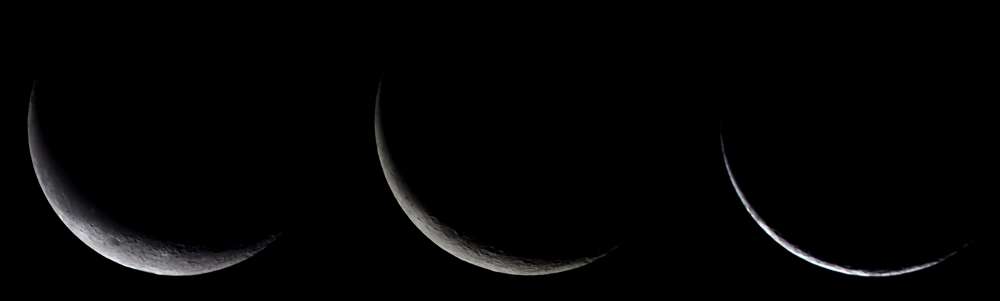
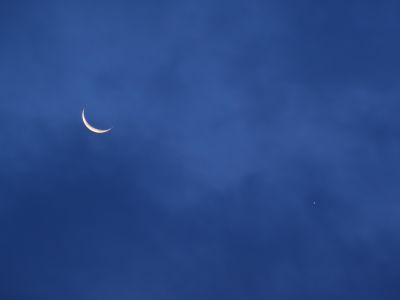
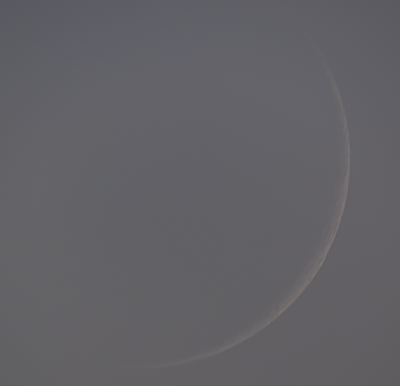
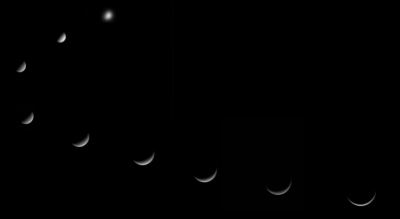
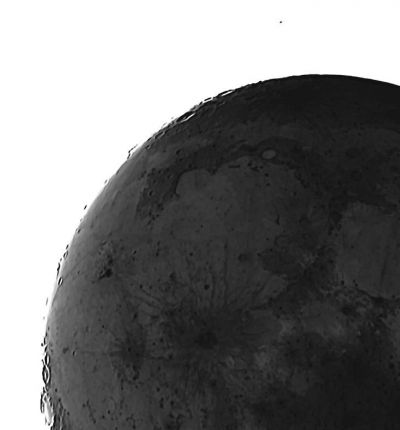
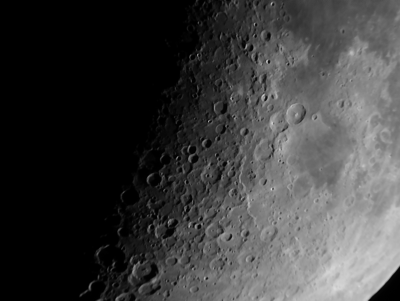
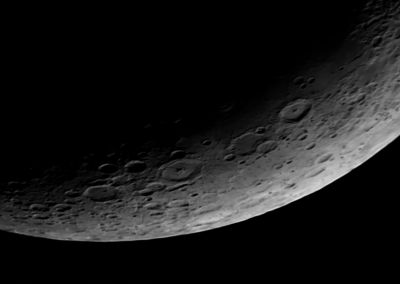
A series of photos of the waning Moon, from left to right:
1) 14.09.2020, 05:10-05:30 Moscow time, Illumination = 15%;
2) 15.09.2020, 04:30-05:00 Moscow time, Illumination = 8%;
3) 16.09.2020, 05:00-05:30 Moscow time, Illumination = 3% – my personal record for observing and photographing the waning Moon.
A good series in concept, but the execution fell short.
For me, it's completely unclear why a 2" exposure was used for the Moon. This guarantees motion blur. Couldn't the gain/ISO have been increased and the exposure time reduced to a fraction of a second, with the noise compensated for by a larger number of frames? Especially since the aperture allows for it. The use of a lunar filter is also unclear; a standard red or IR-pass filter would have been better.
Thank you, Andrey, for your comment!
I’m a beginner amateur, so I still have a lot to learn.
I think I made an inaccuracy in the technical information about the shots. This series of images was processed from video clips lasting 12–18 seconds, taken with a stationary camera; the exposure in the video was at most 1/50–1/60 s. ISO from right to left: 500, 2500, 2000.
The third image was heavily “overcooked” during post-processing in RegiStax. I’ll upload a separately processed version of the third shot (Moon at F=3%) later.
I only recently acquired an IR-Pass filter.
Well, if that's the case, you simply need to spend more time on focusing. My best results came when I focused using a Bahtinov mask on a star at roughly the same altitude as the Moon, and then switched to the Moon for imaging.
As for filters, when switching to an IR-Pass filter, beginners usually see a sharp breakthrough :).
Good luck!
Thank you! Yes, focusing issues do often arise, and I usually only discover them during the final stage of processing, even though the video itself looks contrasty.
4 May, 2021
Reply
Comments are available only to registered users. Register or log in to leave a comment.


Comments
For me, it's completely unclear why a 2" exposure was used for the Moon. This guarantees motion blur. Couldn't the gain/ISO have been increased and the exposure time reduced to a fraction of a second, with the noise compensated for by a larger number of frames? Especially since the aperture allows for it. The use of a lunar filter is also unclear; a standard red or IR-pass filter would have been better.
As for filters, when switching to an IR-Pass filter, beginners usually see a sharp breakthrough :).
Good luck!
Comments are available only to registered users. Register or log in to leave a comment.