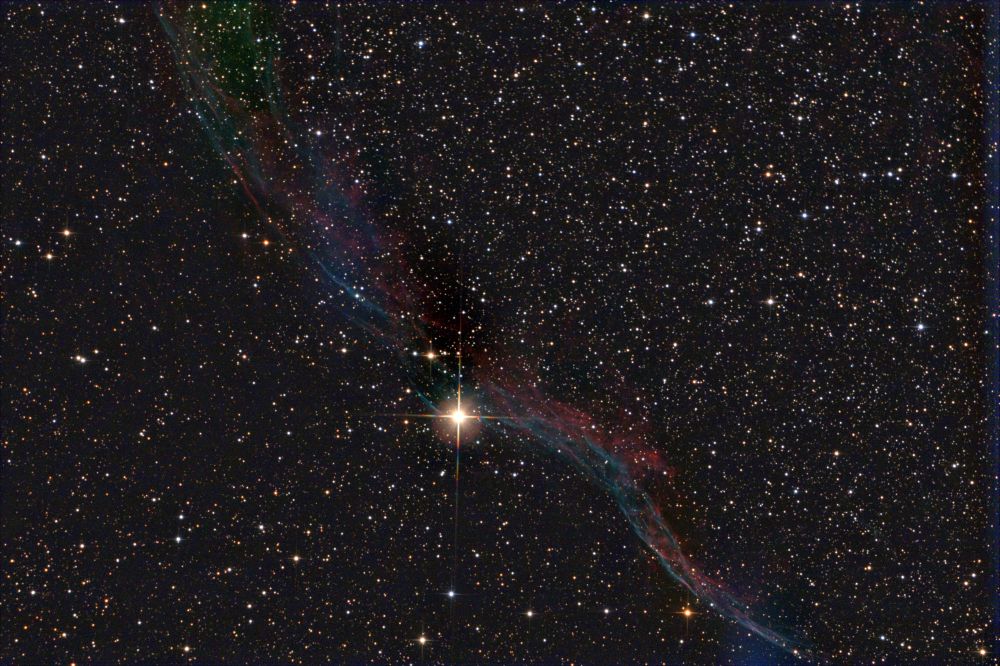
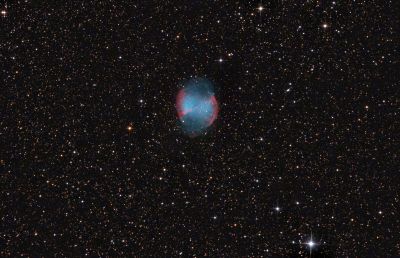
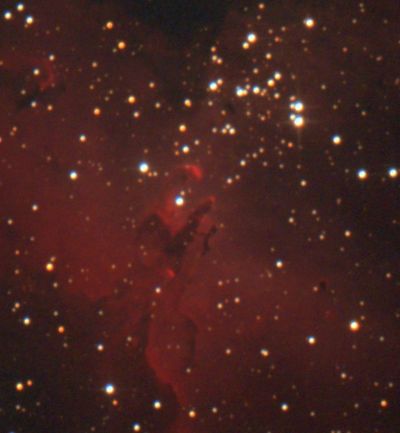
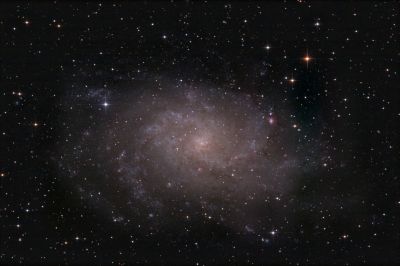
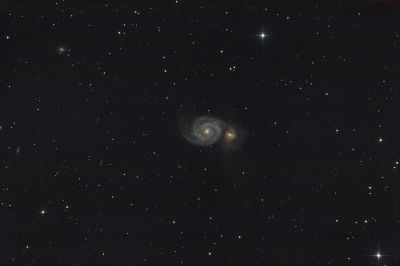
Oleg, the dark spots right on the main subject (something went wrong with the background alignment) and the streaks at the right edge of the frame (no cropping was done) really spoil the impression.
The photo came out a bit rough, so I don't even want to post it in the astrophotography beginners' group. It's too bright for this object—we have almost white nights, and the moon was blasting its light at 75% phase.
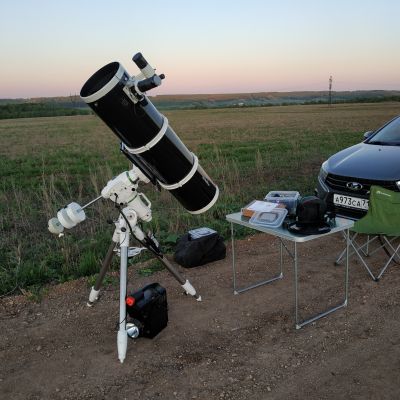
Well, we work with what we have... Can't let the nights go to waste, even such bright ones. There are already too few of them. Last year, for example, during the entire season (March–October; I don't shoot in sub-zero temperatures—I feel sorry for both myself and the equipment), I only managed to get out with the telescope about 10 times. Either rain, or fog, or smoke from wildfires drifting in from Siberia. So I try not to miss clear nights. And I specifically shoot such challenging objects for a reason. I need to test how the Da camera works with the Lumicon UR/IK filter, master APT, learn to guide not via ST4 but through the mount's native USB (the new EQ6-R mounts have a USB port in the mount head), and much more. A big imaging project is planned for August–September; I want to capture one object (well, actually there are six of them) with a total exposure of about 25–30 hours, maybe even more.
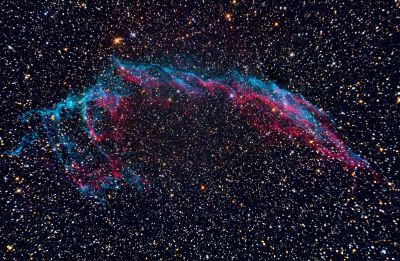
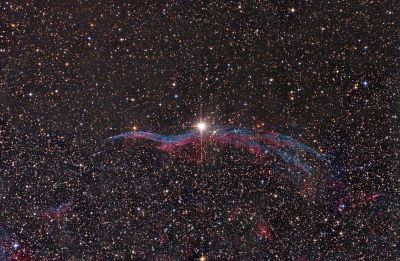
Despite everything, it turned out not much worse than the Broom, shot in September '18, during moonless nights on the old setup, with a simple, non-Da 550 Canon.

Comments
I'll give it a spin and tweak it closer to nighttime.
Comments are available only to registered users. Register or log in to leave a comment.